

The fragrant daal tempered with wild celery seeds and red chillies was served on the lunch table while my mother hid the blisters on her right thumb that had appeared when the celery seeds spluttered all over as the mustard oil got too hot.
She hushed me when I asked whether she had applied any medicated ointment to them.
I don't remember if she had nursed those scars ever, or if they simply healed on their own. The daal was delicious, as I remember now, but I often wonder why she hushed me when I asked about the wound at the lunch table. Perhaps she did not want to make others aware of the small price her thumb had paid for cooking that daal. Perhaps, in the logic of a kitchen, a minor burn was simply something to be endured, not something to interrupt a meal over.
That memory has stayed with me.
Every kitchen leaves its marks. Most are small enough to disappear from memory, but many remain for a lifetime, like a cut from a knife; a burn from hot oil; a blister caused by steam escaping from a pressure cooker; a fingertip scraped against a grater; a wrist that aches after hours of kneading, stirring and chopping; or a palm hardened by years of lifting heavy vessels. Sometimes the injury is visible, more often, it is not.
We remember the aroma of the tempering, the crispness of the fried fish, the softness of the rice, the festive spread laid out on a banana leaf. We remember the recipe that came from a grandmother or the dish that appeared every Sunday.
But how often do we remember the hands that made it?
Every kitchen leaves its signature
Kitchen scars are perhaps one of the few things that transcend culinary cultures.
The recipes might be different, with different ingredients cooked in different utensils using different techniques, but the possibility of a burn, a cut or a strained wrist remains remarkably universal. They are almost like an unspoken language among people who cook. A tiny mark on a finger can carry an entire history without saying a word.
These kitchen injuries and cooking scars may look insignificant when viewed individually, but together they reveal something about the physical labour involved in preparing food and caring for others.
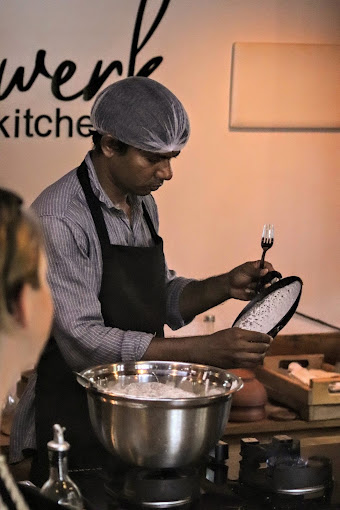
The hands keep the history of the kitchen
Every scar, big or small, carries a memory of the meals prepared. A burn may have been sustained while preparing a festive feast, when the kitchen was already crowded with vessels, spices and hurried hands. A cut may have happened while making breakfast for a family that was already rushing out of the house. An old mark across a palm may have come from years of handling a particular vessel that has long since disappeared from the kitchen.
But sometimes, the history of a scar extends far beyond the moment that caused it. It belongs to thousands of ordinary breakfasts prepared without ceremony, countless school lunches packed before the day had properly begun, and festive meals cooked while everyone else was still asleep. It may carry the memory of food made at midnight for a sick child, rice cooked for someone returning home after a long journey, or a familiar dish prepared simply because someone needed comfort after heartbreak, illness, exhaustion or grief.
The scar, then, is not merely a record of an injury. It is a record of repetition, responsibility and care. Its significance lies in what happened afterwards: the hand healed, the kitchen waited, and the person returned to it the next morning and cooked again.
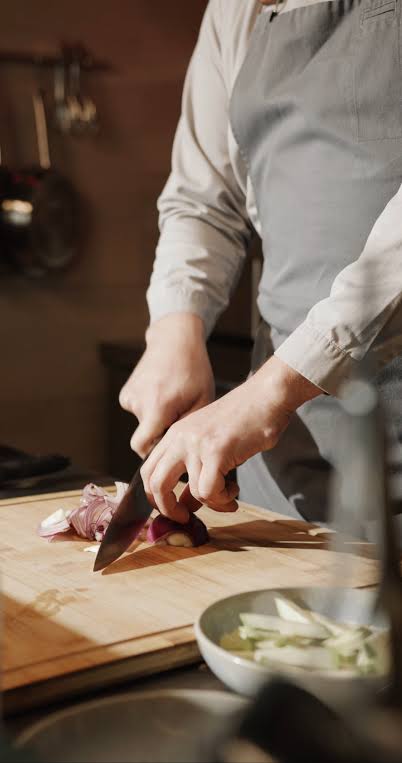
Kitchens are quiet battlefields
There is something almost conflicting about how demanding a kitchen can be. It is a space filled with heat, sharp knives, heavy vessels, spluttering oil, rising steam and open flame, where even the most routine task requires constant movement and attention. Yet the physical demands of this work are rarely acknowledged as work, let alone as a form of endurance.
There are no medals for preparing dinner when the body is already exhausted, no applause for standing over a hot stove with an aching back, and no recognition for making one more meal simply because someone in the house needs to eat. The expectation is often so deeply woven into everyday life that the effort disappears the moment the food reaches the table.
Perhaps that is why the kitchen can be understood as a battlefield, although not one defined by violence or conquest. Its battles are fought through care, repetition and responsibility, and its victories are deliberately ordinary: a warm meal placed on the table, a lunchbox packed before the school bus arrives, a bowl of soup carried to someone who is unwell.
What makes these acts significant is not that they are extraordinary, but that they are repeated regardless of exhaustion, pain or circumstance. And perhaps the most revealing part is that the person who performs them rarely thinks of them as victories at all. And that's one reason why we keep wearing our scars like badges of honours or medals not awarded to us formally.
The kitchen is also an archive
Long after recipes have been forgotten, the hands often retain what the written instructions cannot. They remember the texture of properly kneaded dough, the weight and balance of a cast-iron pan, and the precise sound of onions changing colour in hot oil. They recognise the moment when spices have released their aroma and are ready for the next ingredient, know how much water a particular preparation requires without reaching for a measuring cup, and can tell when rice has reached the softness it needs before the flame is turned off.
Over time, the body becomes an archive of this knowledge. Much of it is acquired through repetition rather than instruction, through doing the same task often enough for judgement to become instinct. The scars that accumulate along the way become part of that physical archive.
They are not always dramatic enough to be noticed. Some are little more than faint lines; others may have faded almost entirely with time. Yet each belongs to a longer history of repeated labour, of returning to the same kitchen and performing the same tasks day after day, often for people who enjoyed the food without ever seeing the effort, skill and physical memory that went into preparing it.
Gratitude begins with noticing
A warm gesture of gratitude can be paying attention, and that means more than just a ‘Thank You’.
Look at the hands of the person who has cooked for you for years. Notice the old burn, the faint cut, the marks that have become so familiar that nobody thinks to ask about them anymore. Ask where they came from. Listen to the story, even if it turns out to be something as ordinary as a pan slipping from a wet hand or hot oil spluttering across the skin during a particularly busy afternoon.
The story itself may not seem significant, but the fact that nobody thought to ask can be. We often remember the meals, the recipes and the flavours associated with a person without ever considering the physical effort through which those memories were created.
To bring a change, we can start appreciating more. Maybe we can cook for the person who has spent years cooking for everyone else, or give them an evening when dinner is not another task waiting to be planned, prepared and served. We can volunteer to wash the dishes, take over the kitchen for a day, or simply sit beside them and ask about the things you never thought to ask because their work had become such an ordinary part of your life.
It’s time we realise that the person who makes the meal is as much a part of that meal as the ingredients, the recipe or the table around which it is served. To appreciate the food without recognising the person who made it possible is to acknowledge only the final result while overlooking everything that came before it.
The next time someone serves you food, look beyond the plate. Look at the hands that prepared it. They may carry marks from years of work that were rarely considered remarkable, even though those hands have quietly created countless meals, routines and memories for the people around them.
Perhaps the question we should have asked much earlier is a simple one: Have you ever asked the people who have spent years cooking for you about the scars they carry? If you have not, perhaps it is worth asking now. And perhaps the most meaningful response will not be another expression of gratitude, but an act that gives some of that care back: cook for them, take something off their hands, or choose a thoughtful gesture that tells them their years of caring for everyone else were noticed after all. It will not erase the scars. But it may change what those scars mean.