

The arrival of summer
After Vishu, the day of the Malayalam New Year, we slowly start preparing ourselves for the summer heat in Kerala. The morning sun grows warmer, and the air turns humid by the afternoon. The native birds return to their nests, silent, saving their songs for the evening breeze. The surroundings fall into a quiet stillness, occasionally interrupted by the rustling of coconut leaves that bring in a soft, cool breeze, relieving the humidity.
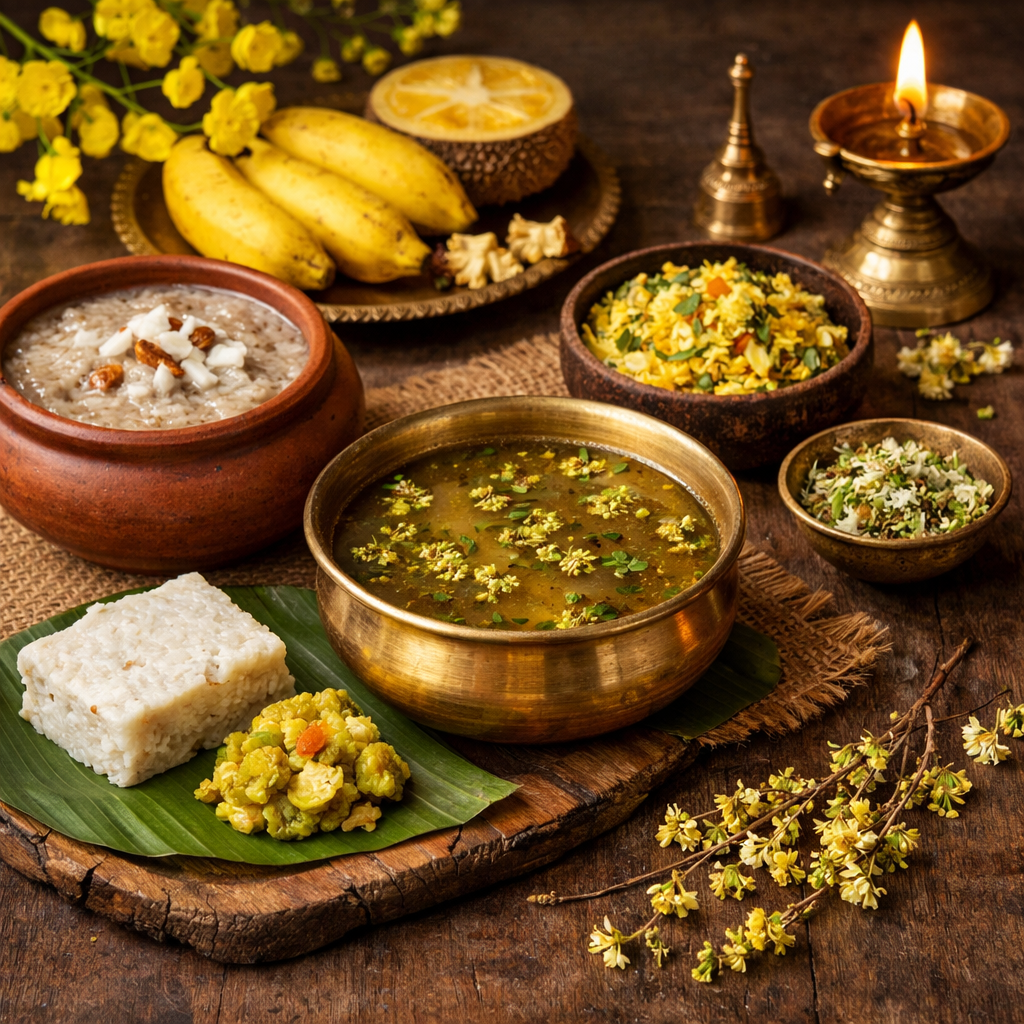
Veppam Poo Rasam and other summery delights
Our homes bring out damp drapes and use them as curtains to keep the interiors cooler from the tropical heat. We start sourcing and stocking sabja seeds as a natural coolant for our homemade summer drinks. Our refrigerators begin to hold large clay pots of homemade yoghurt, set before the moru curries start being made. We bow down to Mother Nature as the Kerala summer arrives and embrace everything that comes with it rather than fighting against it. For we know that the monsoon is not far, and this is the time we eagerly wait for it.
The wisdom of seasonal eating
Our great-grandparents and their ancestors had been passing down the wisdom of eating with the seasons since time immemorial. We adapt naturally to the change in climate and catch hold of the rhythms of the seasons in Kerala. In winter, we had a merry time with winter vegetables, elaborate meat, fish, and crab delicacies rich with spices, but when it is summer, we go strict with the spices, adding them only when absolutely required and avoiding them when it can be done without altering the flavour of the food being cooked.
Our grandmothers had taught us that during summer, let the curries cook in the juices from the vegetables themselves, with a mild tempering of mustard seeds, curry leaves, a handful of shallots, maybe, and a dash of coconut milk, adding a mildly sweet finish to the preparation. Our summer cooking ingredients are dominated by vegetables and spices that cool and heal, like tender coconut, buttermilk, ash gourd, cucumber, raw mango, cumin, coriander, and fennel seeds. In our home kitchens, our womenfolk instinctively know what and how to prepare, sourcing ingredients from backyard trees, kitchen gardens, and neighbourhood produce—an essential part of sustainable, local food culture in Kerala.
Summer dishes of Kerala that cool the body
Since we have already mentioned that the summer cuisine of Kerala is deeply rooted in the wisdom of seasonal eating passed down by our ancestors, we would like to familiarise you with a few signature summer dishes from our kitchen.
We prefer kanji, or soft rice gruel, during our summer lunches, or as a brunch when the heat gets the better of us. Rice kanji helps restore hydration, improves gut health, and, when paired with spicy chilli or tamarind-coconut chutneys, keeps the heat at bay while cooling the body.
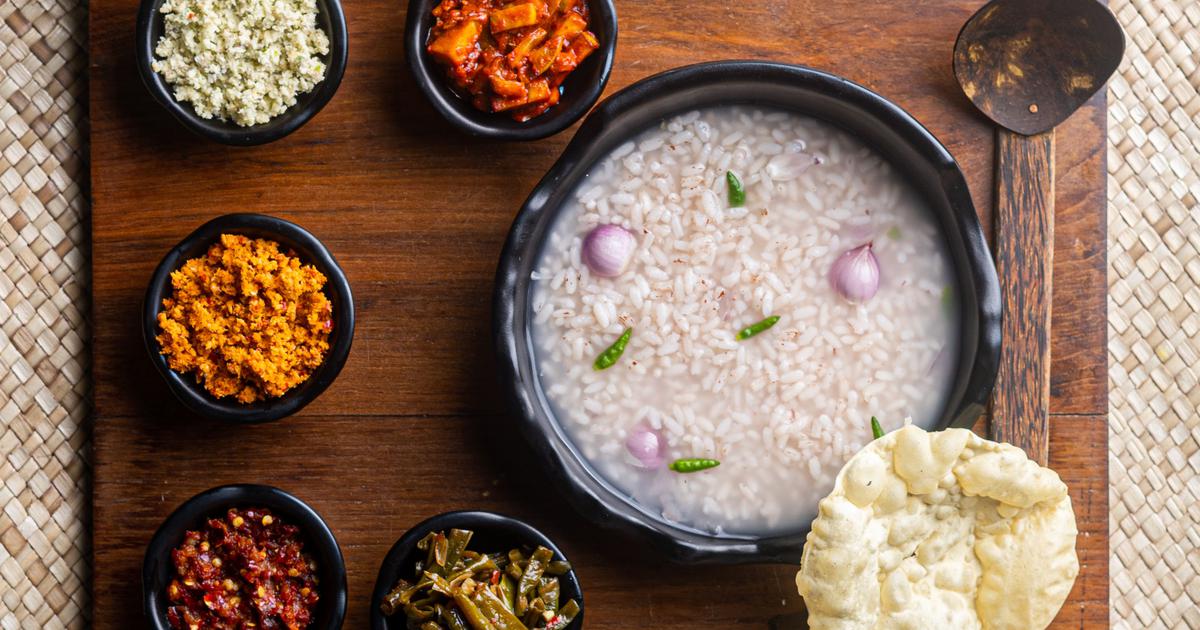
Kanji Platter (P.C: scroll.in)
If not kanji, we opt for ash gourd thorans (a stir-fried Kerala vegetable curry tempered with mustard seeds, curry leaves, and grated coconut), pachadis or yoghurt-based curries, and the quintessential moru curry (a light, spiced buttermilk curry). Thorans, pachadis, and moru curries are typically eaten with local Matta rice, a staple in Kerala cuisine that keeps us full for a long time.
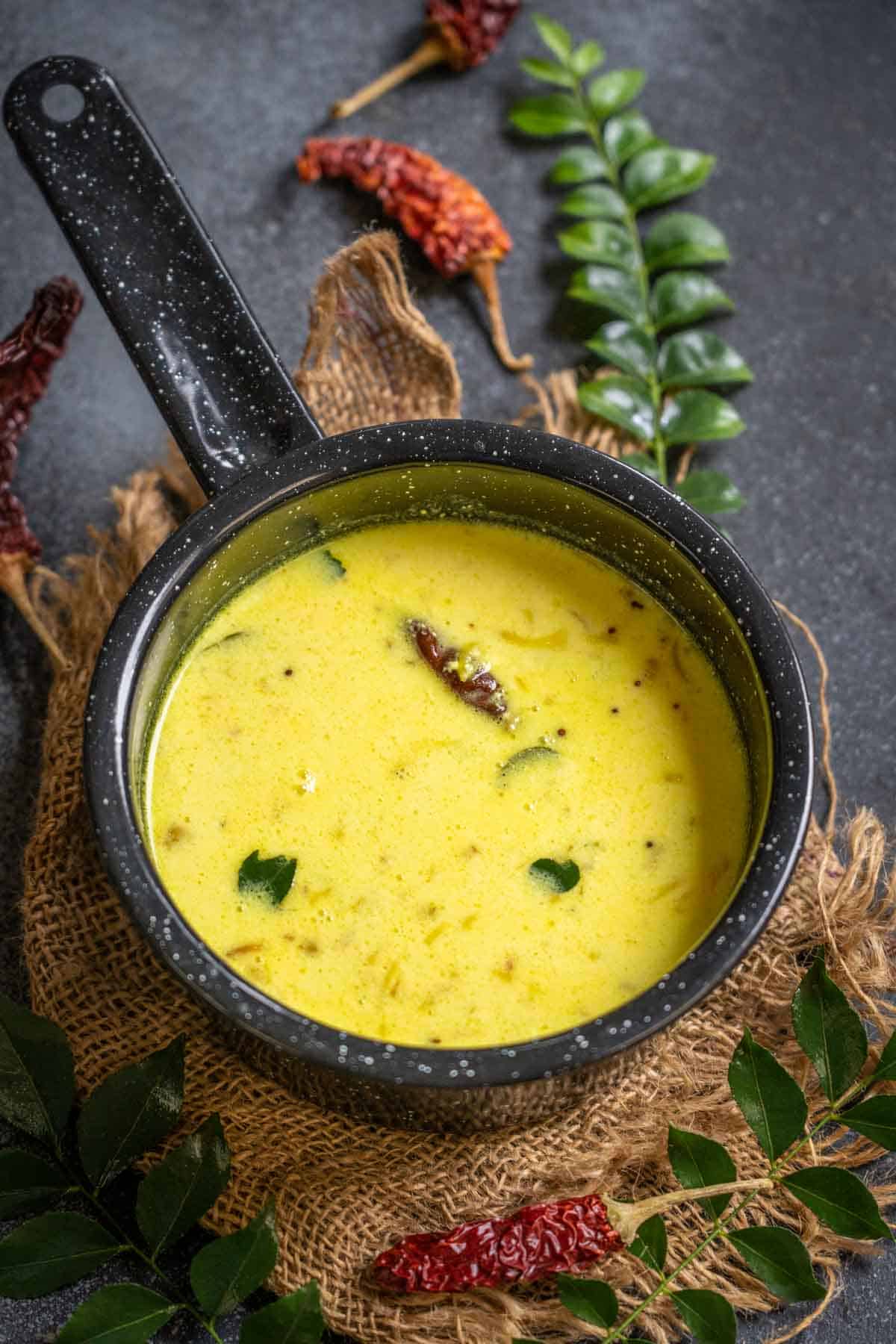
Moru Curry
When we can source neem blossoms, we usually prepare dishes like veppam poo rasam, which heals internally and acts as an immunity booster during the summer. Moringa leaves daal (Muringayila Parippu Curry) and Drumstick Thoran are also extremely popular summer foods here in the Kumarakom backwaters.
On some days, when we feel energetic enough to prepare a variety for lunch, we cook olan with ash gourd and coconut milk, and finish off with fish molee, or a simple sour red fish curry, before retreating for a siesta in dark, cool rooms.
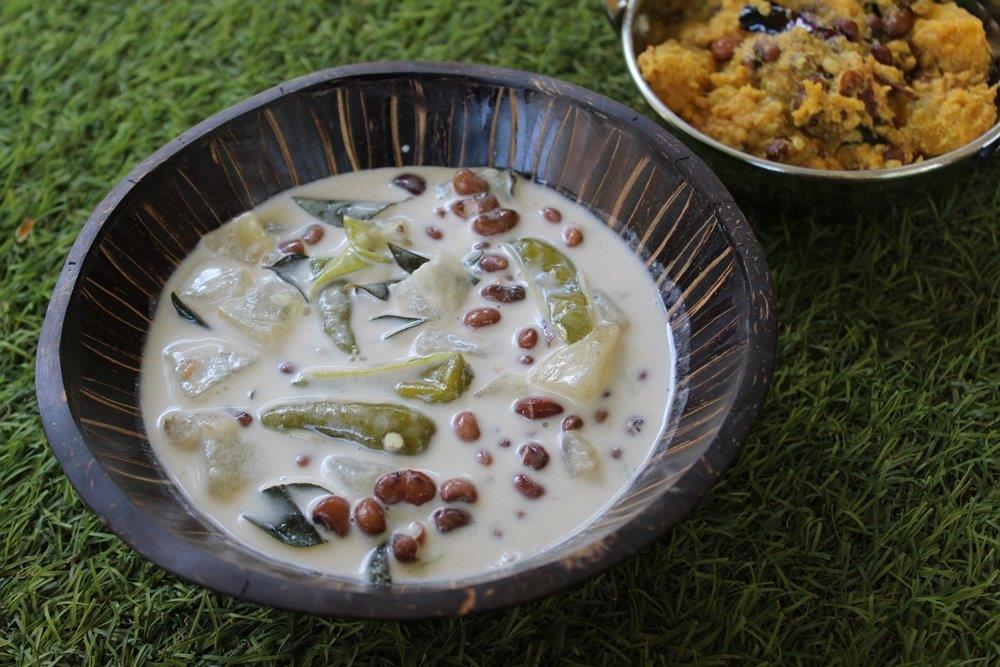
Ashgourd Olan (P.C: google)
A Sip of Summer
On a warm afternoon, a chilled glass of kulukki sarbath, a popular Kerala street drink and one fondly made at home, does more than quench the thirst. Shaken briskly with fresh lime, a whisper of green chilli, crushed mint, sabja seeds, and just the right touch of sweetness, it feels lively and refreshing. Each sip carries a gentle tang, balanced with a mild hint of spice, awakening the senses while easing the heaviness of the heat.

Kulukki Sarbath (P.C: Sulekha Kamath)
Though kulukki sarbath becomes the most convenient choice for a quick cooling drink, it won’t be fair if we don’t mention other traditional Kerala summer beverages that soothe us.
A glass of sambharam (spiced buttermilk), pale and speckled with crushed curry leaves and ginger, feels soothing from the very first taste. It settles the body, cools from within, and leaves behind a soft, lingering freshness.
Tender coconut water, or elaneer, is effortlessly hydrating. Naturally cool and faintly sweet, it restores what the sun quietly takes away.
Nannari sharbat carries a different kind of comfort—earthy, slightly floral, and deeply cooling. Mixed with lime and water, it feels grounding, like a pause in the middle of a long, warm day.
Even the simplest of them all, kanji vellam, has a way of nurturing without asking for attention. Light, mildly starchy, and subtly salted, it hydrates steadily.
There are many more varieties like watermelon juice, full jar soda, and a southern cousin of old shikanji. These drinks are not only indulgent in the usual sense but also light, soothing, and deeply hydrating—designed to cool and restore the body during the Kerala summer.
The ritual of eating in summer
We don’t rush our meals in summer. We eat slowly and share our eating space with our family members. We have always eaten mindfully, but during the summer months, we take extra care about what we are eating and how we are eating our meals.
Lunch is the most important meal of the day. It is eaten when the sun is high, when the body needs nourishment the most. A well-balanced meal with rice, curries, vegetables, and cooling sides helps sustain energy through the afternoon. Dinner, on the other hand, is lighter and simpler. It allows the body to rest and recover after a long, warm day.
Timing plays a quiet but important role. Meals are often aligned with the heat of the day. Eating too late or too heavily can feel uncomfortable in the humidity. The pace is slower, the portions are mindful, and the surroundings are calm. We are fortunate to eat our food on a shaded veranda, amidst the sound of birds, all of which become part of the experience.
A summer glimpse from our kitchen
In our kitchen, the day often begins with a visit to the local market. We take our time walking through the stalls and observing what the season has to offer. Fresh vegetables, ripe fruits, and the day’s catch naturally guide what we cook. There is no fixed plan. The ingredients we choose shape the meal.
Back in the kitchen, cooking becomes a shared and simple process. We prepare the ingredients together, step by step. Someone grates coconut, someone cuts vegetables, and someone watches over the stove. The work is light, and the pace is unhurried. Conversations flow easily as the meal comes together.
Each dish we make has a purpose. Some ingredients are chosen because they help cool the body. Others are added to support digestion or to bring balance to the meal. We take time to understand why certain dishes are prepared in a particular way during this season.
It is not just about following a recipe. It is about learning the thought behind the food. Through this process, cooking becomes more meaningful. It connects us to the season, to the ingredients, and to each other. In many ways, cooking in summer is not just about food. It is about understanding Kerala's seasonal food practices, listening to the body, respecting the climate, and creating space for stillness in the middle of the day.
Eating as a way of living
Summer is often spoken about as something to endure. We begin by thinking of the heat, the humidity, and the long, heavy afternoons. But slowly, it reveals itself as something more. It is not just a season of intensity. It carries its own rhythm—quiet, steady, and deeply connected to the natural world.
The days move differently. Mornings begin early and gently. Afternoons ask us to slow down. Evenings bring a sense of ease. Our food follows this same rhythm. Meals become lighter, cooling, and more mindful. Ingredients are chosen with care, not just for taste, but for how they support the body through the heat.
In this way, food becomes more than nourishment. It becomes a way to live in harmony with the season. Instead of resisting the warmth, we learn to move with it. We adjust, we listen, and we respond through what we cook and how we eat. And while we adjust, we do gradually realize that when we begin to eat with the season, we begin to feel at home within it.
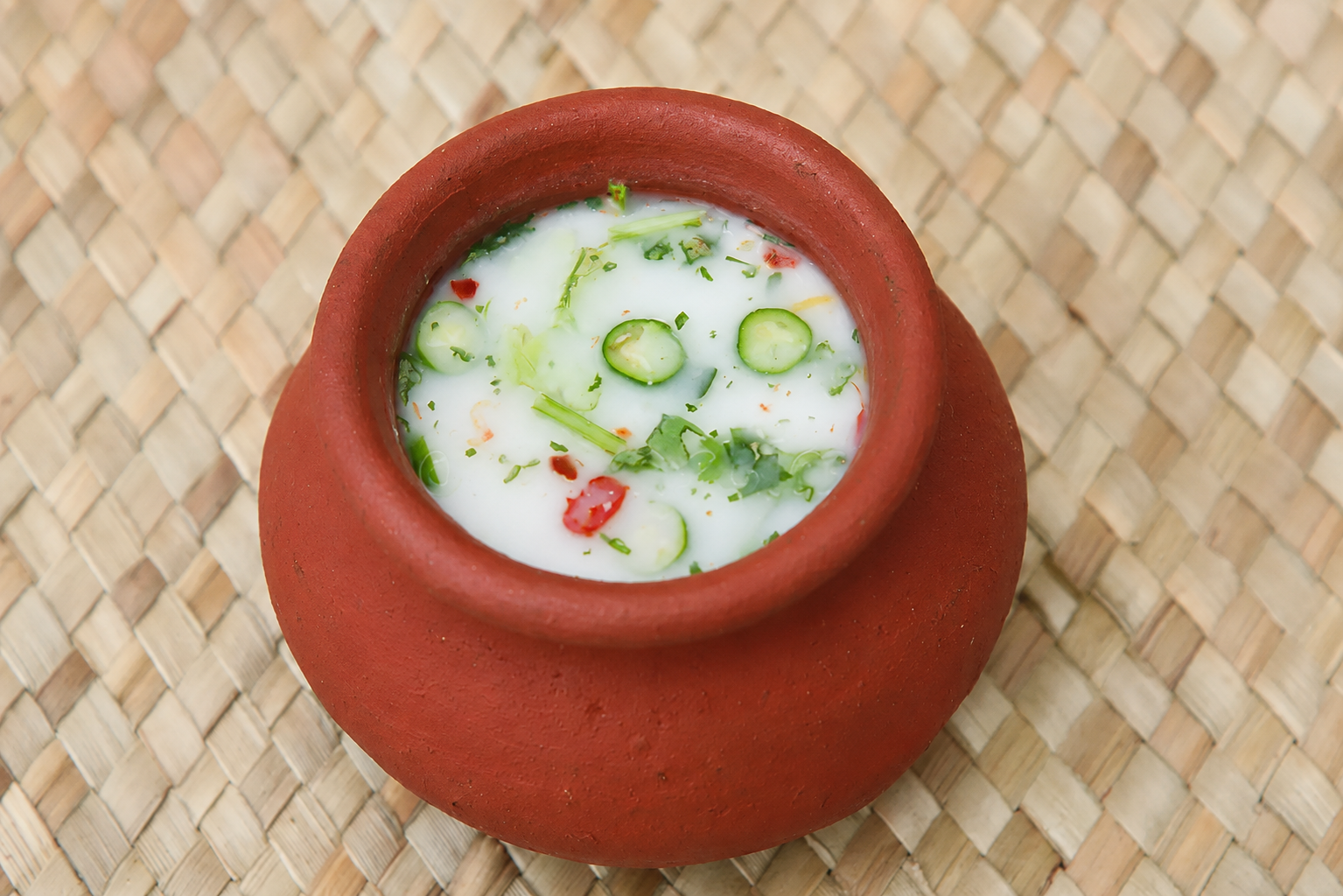
A clay pot full of Sambharam
Just before we sign off with this Kerala summer food story, here's a simple, refreshing and popular recipe of our most loved Sambharam:
Sambharam (Spiced Buttermilk) A light, cooling summer drink that soothes the body and supports digestion. Prep Time: 10 minutes Serves: 2–3 Ingredients
Method
To Serve Serve chilled during mid-morning or afternoon. It pairs well with traditional meals and helps keep the body cool, light, and refreshed. |